

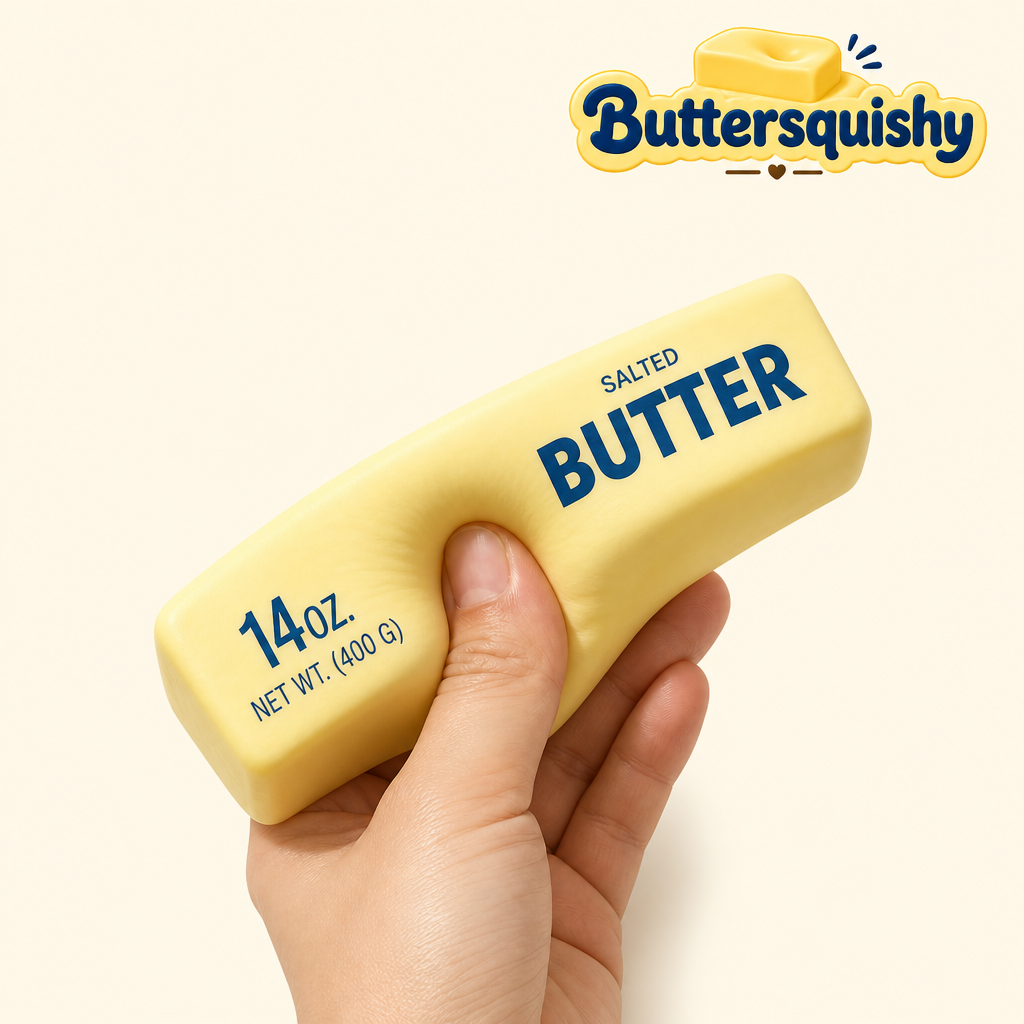
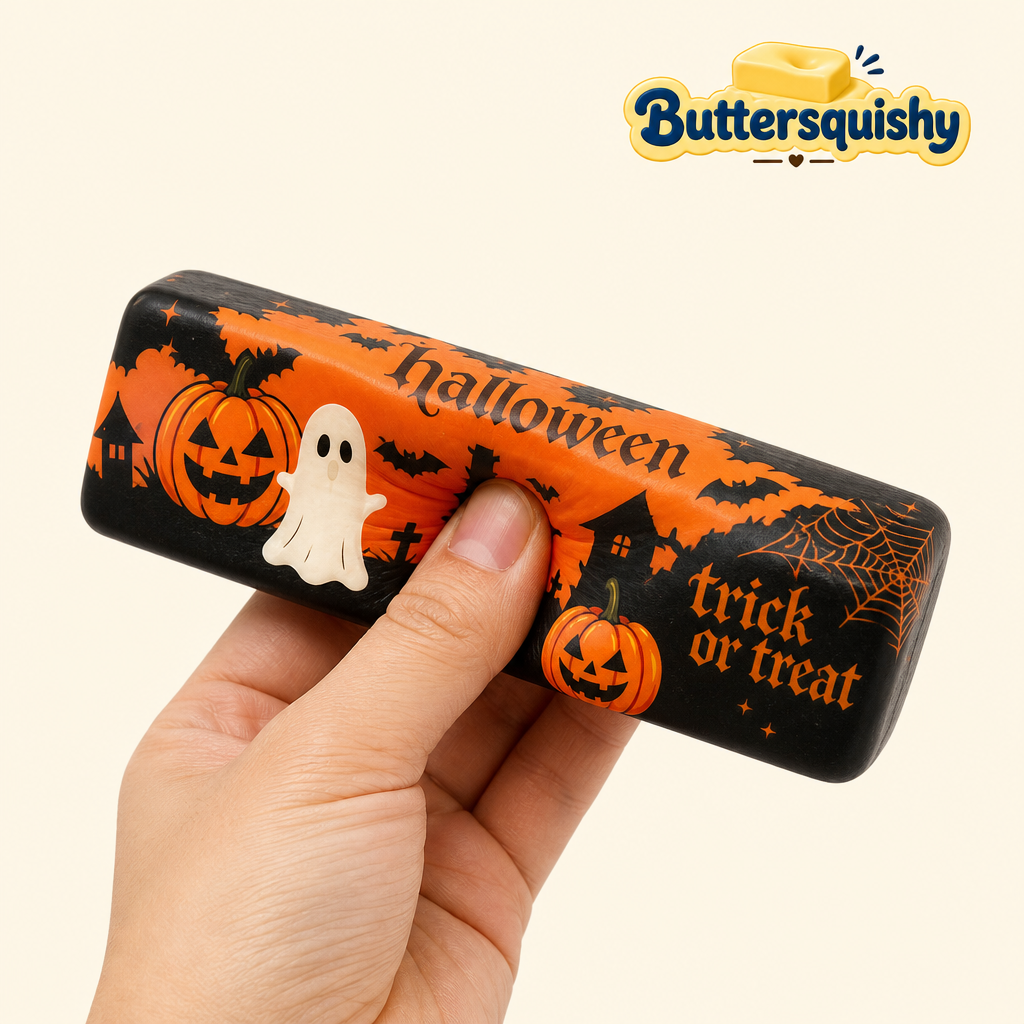
 Halloween Ghost Butter 3-Pack
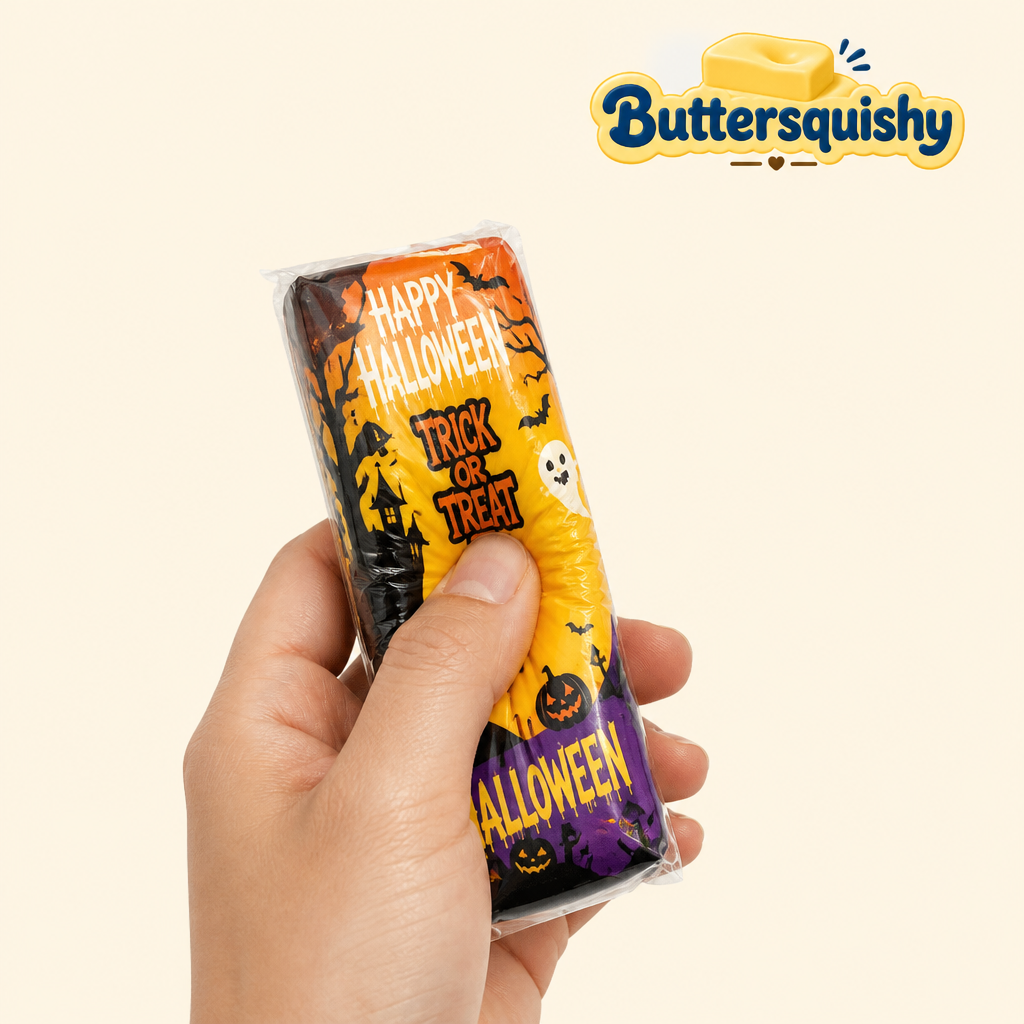 Halloween Ghost Butter 12-Pack
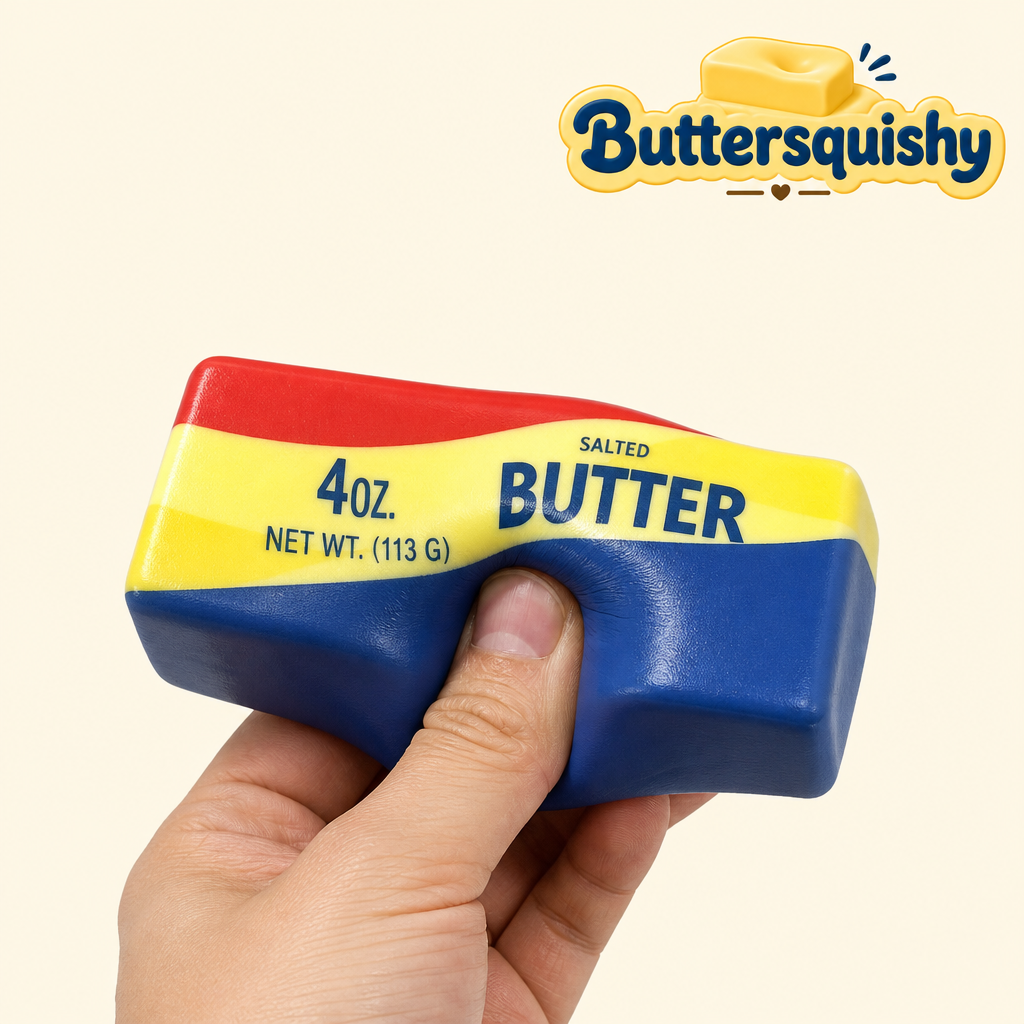 Rainbow Stripe Butter
 Chocolate Berry Butter 3-Pack
 Strawberry Chocolate Butter 4-Pack
 Sunset Trio Butter 3-Pack
 Pink Orange Crunch Butter 2-Pack
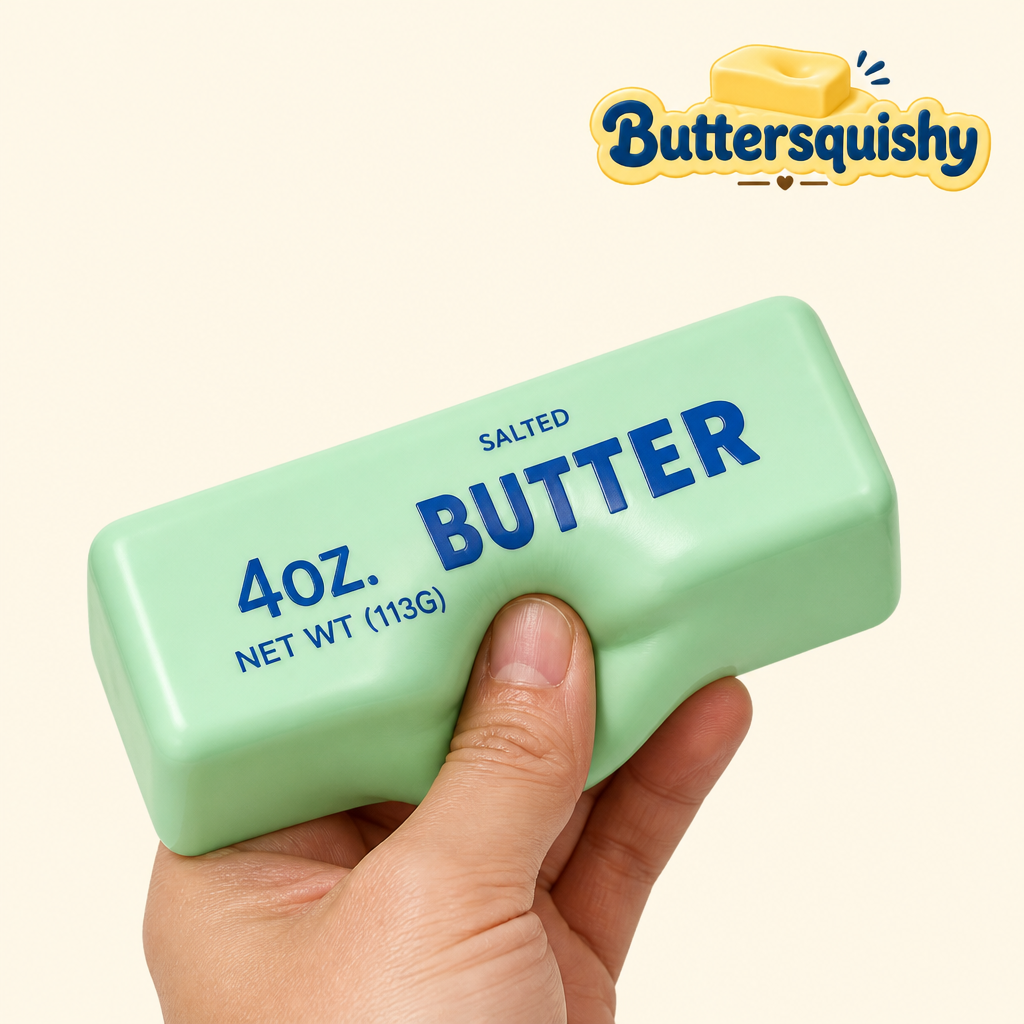 Mint Berry Crunch Butter 2-Pack
Squish Stretch Ball: Comparing Squeeze Feel, Weight, and Desk Durability
A squish stretch ball relies on elastic outer skins or firm fills that snap right back. By contrast, a slow-rise butter squishy compresses under your palm and rebounds at a steady pace. Stress balls are commonly grouped into soft, medium, and hard densities for light relief, general desk use, or firmer grip resistance.
Chocolate Butter Stick is listed at $9.99 USD as a slow-rise, soft butter squishy with a 3-second rebound index. For example, pressing it gives a gradual return rather than the snap of a liquid-filled stretch ball. Because softer squeeze toys wear out faster under heavy handling, matching firmness to your daily squeeze habits matters more than chasing extreme softness.
How Do Stress-Ball Density Tiers Compare to a Slow-Rise Butter Squishy?
Stress-ball density tiers separate light calming squeezes from heavier grip resistance, whereas a slow-rise butter squishy focuses on gradual rebound. According to Serenilite’s stress ball buying guide, buyers pick among soft, medium, and hard density tiers based on hand strength and routine. Soft density fits light stress relief and casual hand movement. Medium density suits general office use and steady desk fidgeting. Hard density gives firmer grip resistance for users who want a stronger workout.
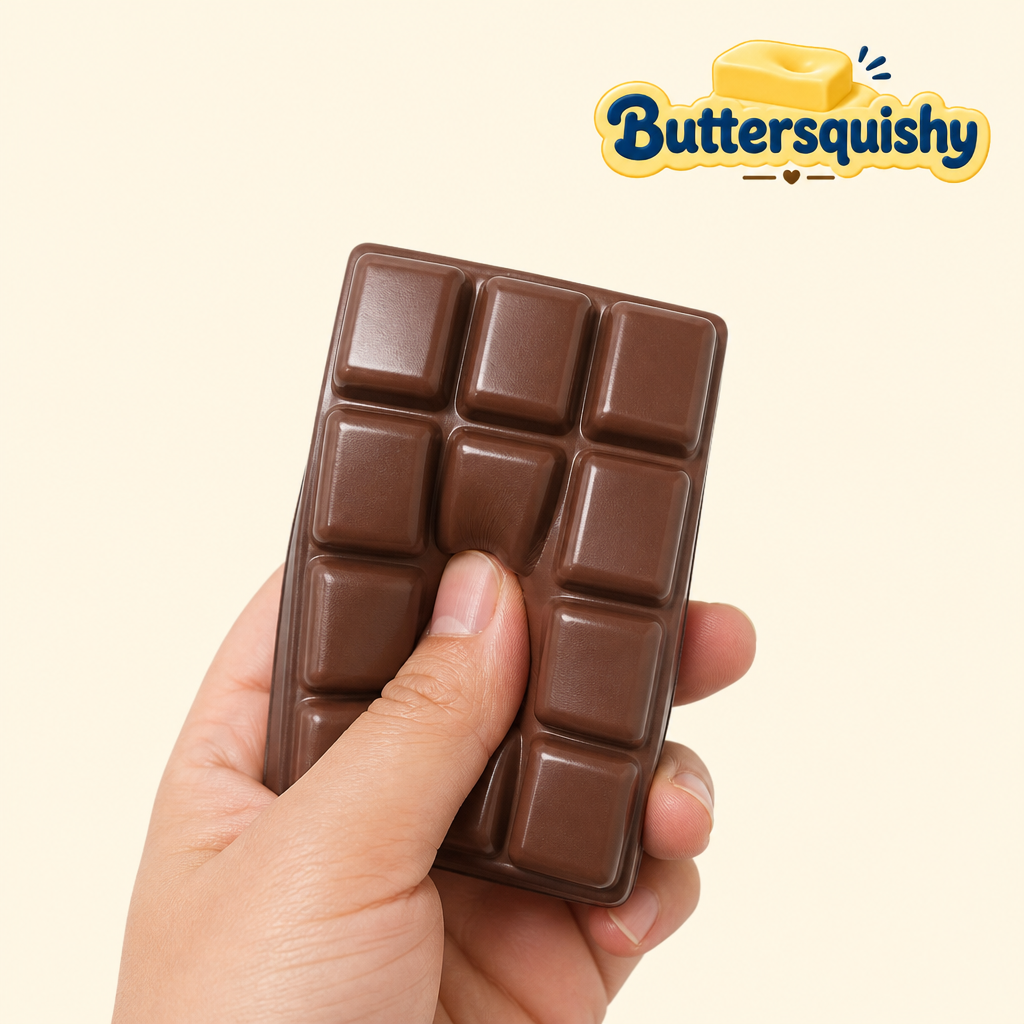
A squish stretch ball belongs to a different tactile group than a butter-style block. Elastic stretch balls pull outward and snap back right away, so your fingers feel constant tension. However, Chocolate Butter Stick is a slow-rise, soft butter squishy molded like a chocolate bar with twelve raised squares. When you press a thumb into one corner, the surface indents and returns over a 3-second rebound cycle. Therefore, it gives a calm compression rhythm instead of a brisk snap.
In practice, your choice depends on what your hands do during calls or reading sessions. If you like pulling and twisting a round toy between both hands, a stretch ball fits that motion. On the other hand, if you prefer resting a rectangular piece in one palm and pressing down, a slow-rise butter squishy works better.
| Comparison Factor | Soft-Density Stress Ball | Medium-Density Stress Ball | Hard-Density Stress Ball | Chocolate Butter Stick |
|---|---|---|---|---|
| Primary Use Case | Light stress relief and casual hand use | General desk and office fidgeting | Firmer grip resistance | Slow-rise desk compression |
| Feel Profile | Pliable with light resistance | Balanced give and return | Stiff and resistant | Soft butter squishy feel |
| Rebound Behavior | Quick foam or gel return | Steady elastic return | Immediate firm pushback | Slow-rise 3-second rebound |
| Listed Price | Varies by brand | Varies by brand | Varies by brand | $9.99 USD |
What Tradeoffs Affect Squeeze Feel, Rebound Speed, and Desk Durability?
Squeeze feel and desk durability pull in opposite directions, so picking the right firmness prevents early wear. According to 1001 Stress Balls’ guide to materials and firmness levels, very soft squeeze toys can wear out faster under heavy handling. Conversely, very firm stress balls can feel too stiff for a calming squeeze. For instance, restless pinching and aggressive twisting put concentrated strain on soft outer walls. Meanwhile, a rigid ball resists light finger pressure and can tire your hand during a thirty-minute meeting.
Buyers in fidget toy communities often ask how to pick a squishy ball that keeps its firmness. In an r/fidgettoys thread, a commenter asked specifically for a squishy ball that stays firm over time. That question reflects a common desk issue: people buy the softest stretch ball they find, squeeze it hard all week, and notice it loses resistance.
Consequently, you should match your squeeze pressure to the toy’s intended role. Chocolate Butter Stick costs $9.99 USD and delivers a soft, slow-rise rebound rated at 3 seconds. Because it is built for calm, palm-level compression instead of heavy stretching, pressing it evenly with your thumb or palm preserves its shape longer. In practice, treating a slow-rise squishy as a light desk companion rather than a grip trainer extends its useful life.
Sizing, Weight, and Shape: How to Evaluate a Squish Stretch Ball Before Buying
Evaluating a squish stretch ball starts with checking confirmed product details and seeing how shape affects hand fit. Round stress balls sit centered in the palm, so diameter decides whether your fingers wrap around the sphere. By contrast, a rectangular block like Chocolate Butter Stick spreads pressure across a flat base and segmented top. Because the surface has twelve square pads, you can press a single corner with your thumb or fold the whole bar in your palm.
When comparing options online, check the verified product listing before assuming a toy matches a standard sphere. For example, Chocolate Butter Stick lists a $9.99 USD price, a soft slow-rise butter squishy build, and a 3-second rebound index. Its product photo shows a palm-sized rectangular chocolate bar profile, though exact millimeter measurements and gram weight are not published on the product page. In practice, if you need a strict pocket weight or a calibrated diameter for grip work, verify those numbers before ordering.
Storage between calls also matters on a crowded desk. A round stretch ball can roll off an angled desk mat or slip under a keyboard stand. A flat-bottomed bar stays put beside a mouse pad or notebook. To compare other butter-style shapes and slow-rise designs, browse the full Shop collection to find a silhouette that fits your workspace.
How Should You Clean and Store a Squishy Toy Safely?
Proper storage and weekly inspection keep any squeeze toy clean and safe for everyday desk use. According to the U.S. Consumer Product Safety Commission, consumers should never microwave or intentionally heat squishy toys. Keep them out of hot cars, direct sunlight, and away from heaters. Heat damages soft polymers, alters internal fills, and creates serious burn hazards. The CPSC also advises stopping use right away if any toy becomes torn, punctured, leaking, sticky, or discolored.
Day-to-day cleaning for a non-food squeeze toy like Chocolate Butter Stick stays simple. For example, wipe the exterior with a damp cloth to clear desk dust and hand oils, then let it air-dry away from direct heat. Avoid soaking the toy in water or scrubbing it with harsh cleaners, because excess moisture and solvents can degrade the soft surface. Also keep non-food squishies away from desk snacks so no one mistakes a chocolate-shaped toy for edible food.
Follow this quick desk care checklist each week:
- Keep the toy away from warm windowsills, space heaters, microwaves, and parked cars.
- Wipe the surface with a damp cloth after heavy desk use and let it air-dry at room temperature.
- Press with flat fingers or your palm instead of digging sharp fingernails into the seams.
- Inspect the corners and surface weekly for tears, punctures, tackiness, or discoloration.
- Discard the toy right away if it rips, leaks, or starts breaking down.
Frequently Asked Questions
How do you pick a squish stretch ball that stays firm over time?
Choose a medium or hard density ball instead of an ultra-plush model. According to Serenilite’s density breakdown, medium density balances comfort with everyday structure, while hard density handles heavier grip pressure without collapsing. In practice, rotating between two desk toys also reduces repeated fatigue on a single outer skin.
Is Chocolate Butter Stick a stretch ball or a slow-rise squishy?
It is a $9.99 USD slow-rise butter squishy with a 3-second rise rating, not a liquid-filled elastic ball or a medical device. You press the rectangular twelve-square bar in your hand and watch the indentation lift back gradually rather than snapping into place.
When should you stop using a squishy toy and replace it?
Throw the toy out as soon as you notice splits, pinholes, leaking fill, tacky residue, or color shifts. Per CPSC guidance, damaged squeeze toys cannot be safely patched. Never warm up a stiff toy in a microwave or hot water, since heating creates burn risks.